
Non Toxic Turf Materials Review for Florida
A backyard surface can look perfect on installation day and still be the wrong system for a Florida family. The difference is often hidden below the blades: the yarn chemistry, backing, infill, seam adhesive, and drainage layers. This non toxic turf materials review explains what to ask for when you want an artificial lawn that feels clean underfoot, performs through heavy rain, and supports the way your children and pets actually use the yard.
“Non-toxic” should not be treated as a vague marketing label. It should lead to clear questions about material disclosures, testing, drainage design, and how the entire turf system will be installed. A premium product matters, but so does the work beneath it.
What Non-Toxic Means in an Artificial Turf System
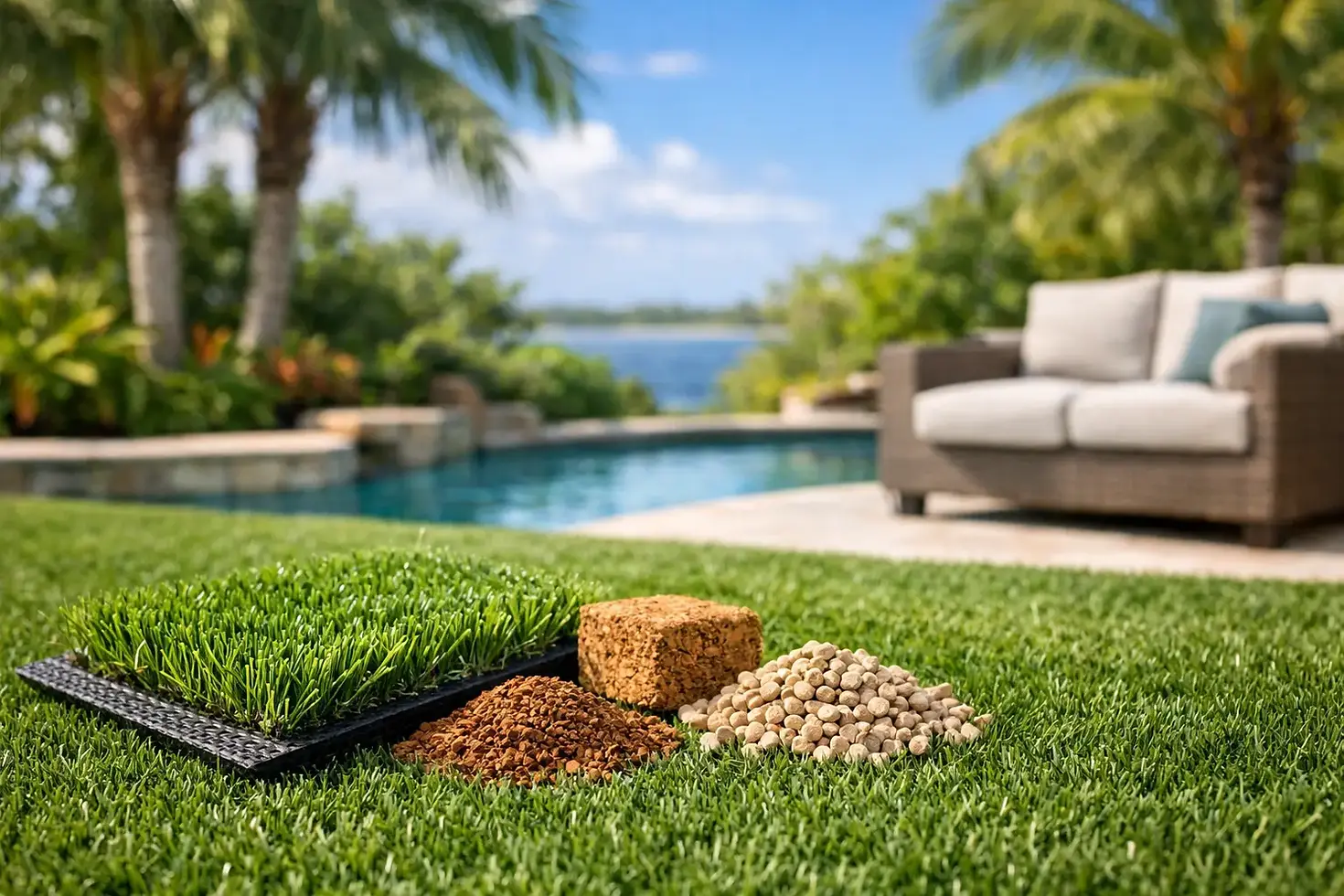
Artificial turf is a system, not a single material. A responsible review considers every component that may be exposed to sun, water, pets, children, and everyday foot traffic. The most common components are polyethylene or polypropylene turf fibers, a primary backing, a secondary coating, infill, seam materials, and a compacted base with drainage.
For most residential landscape and pet applications, polyethylene is the preferred face fiber. It is soft, durable, and widely used for turf designed around bare feet, play, and everyday living. Polypropylene can work well in certain specialty applications, including some putting green surfaces, but it is generally less durable than polyethylene in heavy-use landscape areas. Nylon is exceptionally resilient, yet it can retain more heat and is not automatically the best choice for a sunny Florida lawn.
The key is not simply choosing one polymer over another. Homeowners should ask whether the finished product is made without intentionally added PFAS, whether the manufacturer provides current third-party testing or material documentation, and whether the selected turf is appropriate for its intended use. A putting green, dog run, playground, and poolside landscape should not all receive the same specification.
Non Toxic Turf Materials Review: The Parts That Matter
Turf fibers and colorants
Good turf fibers are UV-stabilized so they resist fading and breakdown under Florida sunlight. They should also have a realistic color blend and blade shape suited to the application. Denser, softer fibers can create a lush landscape appearance, while more resilient yarns help a pet zone or play area recover after repeated use.
Ask for product documentation rather than relying on broad claims such as “safe” or “eco-friendly.” Material transparency matters. For families, that may include asking about lead testing, heavy-metal testing, PFAS-free positioning, and compliance with applicable product safety standards. The best answer is specific, current, and tied to the actual product being installed.
Backing and secondary coating
The backing holds the yarn in place and plays a major role in drainage and long-term durability. Many quality systems use a polyurethane or latex-based secondary coating. Neither label alone tells the full story. The better question is whether the backing has been engineered for drainage, heat, moisture, and the expected level of use.
In coastal and rainy areas of Central Florida, a fully permeable backing is often a smart choice because it allows water to move through the turf rather than collect on top. Still, permeability only helps if the base below the turf is graded and built to move water away. Turf with excellent drainage holes installed over a poorly prepared base can still puddle, smell, or shift.
Infill
Infill is where many homeowners have the most questions, and for good reason. It affects drainage, cooling, blade support, comfort, odor control, and maintenance. It is not an optional afterthought.
Clean, washed silica sand is a common and practical infill for many residential installations. It adds weight, helps fibers stand upright, and is compatible with landscape and putting green systems when selected correctly. For pet turf, specialized antimicrobial or odor-control infill can be useful, particularly in dedicated relief areas. The right product helps manage moisture and urine odor, but it does not replace drainage, periodic rinsing, or basic maintenance.
Rubber infill has a place in certain athletic applications, where cushioning and sports performance are central concerns. It is not automatically the right choice for a residential yard, playground, or pool area. Homeowners who prefer to avoid crumb rubber should say so early in the design process. There are other infill approaches, but each brings trade-offs involving cooling, stability, drainage, and expected use.
Organic infills are sometimes marketed as a natural alternative. They may suit limited applications, but Florida humidity and rain deserve careful consideration. Some organic materials can compact, hold moisture, or require more attention over time. “Natural” does not always mean lower-maintenance or better-performing in a wet, hot climate.
Seams, adhesives, and edge restraint
Seams and edge details are easy to overlook because they are mostly hidden when the job is complete. They are also where installation quality becomes visible years later. Premium seam tape, appropriate adhesive, clean joins, and secure edge restraint prevent separation, curling, and movement.
For homeowners evaluating low-toxicity materials, ask the installer what seam and adhesive system will be used and how it will be allowed to cure. A professional crew should be able to explain the materials plainly and match the installation method to the project conditions. Mechanical fastening, properly secured perimeter edges, and thoughtful layout can reduce unnecessary seams in highly visible areas.
Drainage Is a Safety and Performance Issue
A turf system cannot be called family-friendly if it traps standing water. Puddles invite odors, insects, algae, and messy feet. In severe weather, poor drainage can also undermine the base and shorten the life of the installation.
Florida properties often have compacted soil, flat grades, pool decks, roof runoff, and sudden downpours working against them. That is why the sub-base deserves as much attention as the turf itself. A properly prepared aggregate base, corrected grading, and, where needed, dedicated drainage components help water leave the surface efficiently.
Champion Greens designs installations around local conditions with its HurricaneShield™ Artificial Turf Installation System. That approach focuses on durable material selection, secure installation practices, and drainage planning suited to Florida’s heat, rain, and storm exposure. For a backyard that receives regular pet use or sits near a pool, those details are not upgrades in name only. They help preserve a cleaner, more stable surface.
Match the Material to How the Space Will Be Used
The safest choice is not always the softest or the densest turf sample. It is the system that fits the space. A family play lawn benefits from soft fibers, dependable drainage, and a stable base. A pet area needs rapid permeability, odor-management planning, and easy rinsing access. A putting green needs a tightly controlled surface, selected infill, and a base built for consistent ball roll.
Commercial properties, schools, and sports facilities require another level of review. Higher traffic changes the requirements for face weight, fiber resilience, seam strength, drainage capacity, and maintenance planning. For playgrounds, fall protection may require a tested shock-absorbing pad beneath the turf. That is separate from ordinary landscape turf installation and should be specified for the equipment, fall height, and applicable safety requirements.
Poolside turf also needs special attention. It should drain quickly, stay secure at transitions, and be paired with materials that can tolerate regular chlorinated-water exposure. A system designed for a shaded side yard may not deliver the same performance beside a bright, reflective pool deck.
Questions Worth Asking Before You Choose
A clear conversation with your installer can prevent most material mismatches. Ask for the exact turf product name, its intended application, and the documentation behind safety claims. Ask whether the turf and infill are PFAS-free, what testing is available for lead and heavy metals, and whether the manufacturer warranty applies to Florida installations.
Then ask the questions that protect the finished project: How will water drain through the turf and base? What happens at the edges? What infill is recommended for pets, children, or putting performance? How will seams be secured? What routine care will keep the system clean and looking its best?
Be cautious of an installer who answers every question with the same product recommendation. Material selection should reflect sun exposure, site grade, traffic, pets, play, and the look you want. A good design is specific because your property is specific.
A Cleaner Yard Starts Below the Surface
Artificial turf can eliminate mowing, watering, weeding, fertilizer applications, and repeated resodding. Those benefits are meaningful, especially for busy homes and properties that struggle with Florida lawn conditions. But a low-maintenance yard still deserves informed material choices.
Choose products with transparent safety information, select infill for the actual use of the space, and insist on drainage and installation standards that support the product. When the system under the blades is built with the same care as the surface you see, your outdoor space is better prepared for children, pets, guests, and the next hard Florida rain.


Comments