
Drainage Contractors for Florida Yards That Last
A Florida yard can look perfectly level on a sunny afternoon and still hold enough water after a storm to damage turf, wash out pavers, and keep pets from using the yard. Experienced drainage contractors do more than install a pipe where water happens to collect. They identify where water starts, how it moves across the property, and where it can be released without creating a new problem.
For homeowners in Palm Harbor, Clearwater, Dunedin, and throughout Pinellas and Pasco counties, drainage is not an accessory project. It is part of building an outdoor space that stays usable through summer downpours, high humidity, and the pressure of hurricane-season rainfall. A properly planned drainage system supports the entire investment, from artificial turf and putting greens to patios, pool decks, landscaping, and foundations.
What Drainage Contractors Should Evaluate First
The visible puddle is rarely the whole story. Water may be pooling because a patio edge directs runoff toward the house, a neighboring property drains downhill, compacted soil will not absorb rainfall, or an existing downspout ends in the wrong location. A drainage contractor should evaluate the complete site before recommending a solution.
That assessment starts with grade. Even a small elevation change affects where water travels. The contractor should also look at roof runoff, gutters, downspout locations, hardscape edges, low areas around the foundation, existing drain lines, and the final discharge point. In Florida, high water tables and sandy soils add another layer of complexity. Water may move quickly through some areas while remaining trapped in others.
The best recommendation depends on the property. A narrow side yard may need a surface collection system and a carefully routed underground line. A broad backyard with artificial turf may need reshaping, a compacted aggregate base, and drainage beneath the turf to move water through the system. A pool deck can require channel drains that intercept runoff before it reaches the deck or adjacent planting beds.
A contractor who proposes the same solution before inspecting the grade, roof drainage, and surrounding surfaces is making assumptions. Drainage should be designed for the actual site, not selected from a one-size-fits-all menu.
Common Drainage Systems for Florida Properties
Different systems manage different kinds of water. Surface water needs to be collected quickly, while subsurface water may need to be redirected through a gravel bed or underground piping. Often, a durable solution uses more than one approach.
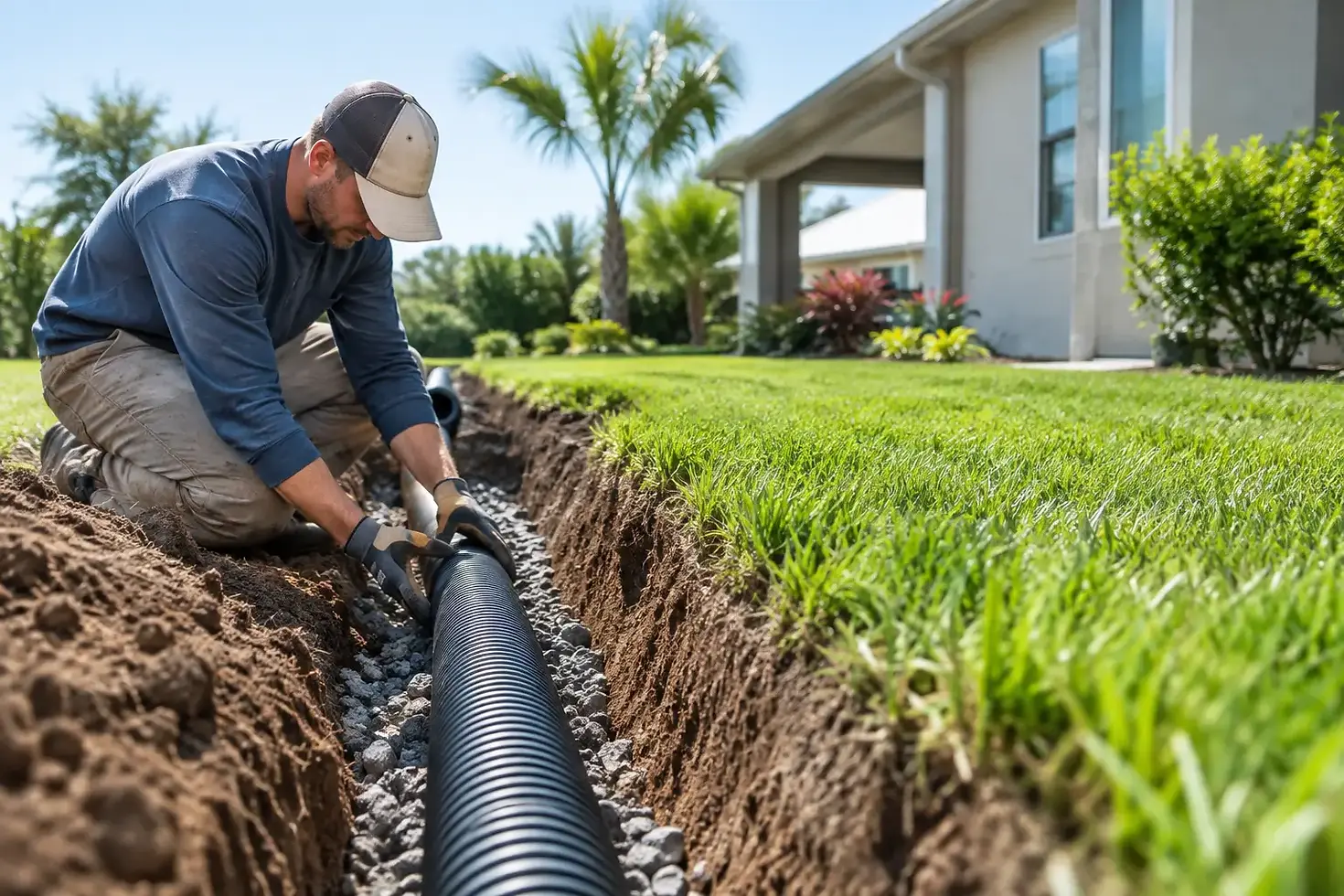
French drains are useful when water is collecting below the surface or along an edge where soil stays saturated. These systems typically use perforated pipe surrounded by clean drainage stone, allowing water to enter the pipe and move toward an approved outlet. They can work well in landscaped areas, but placement and outlet elevation matter. A French drain without a reliable discharge path can simply become a buried reservoir.
Catch basins collect surface runoff at low points, around patios, beside driveways, or near downspouts. Connected solid drain pipe then carries the water away from the collection area. For heavy rainfall, basin size, grate selection, pipe slope, and debris management all affect performance. Small grates can clog with leaves and mulch long before the system reaches its capacity.
Channel drains are often installed along hardscape transitions, garage entries, pool decks, and paver edges. Their long, narrow profile captures sheet flow before it crosses into an area where water can cause erosion, staining, or pooling. They are particularly valuable where changing the grade is not practical.
Dry wells and pop-up emitters can be appropriate in certain conditions, but they are not automatic answers. A dry well depends on surrounding soil accepting water, which may be limited during a prolonged storm or when the water table is high. Pop-up emitters need a low, safe location where water can exit without washing out a lawn, affecting a neighbor, or returning toward the home.
Why Artificial Turf Still Needs a Drainage Plan
Artificial turf eliminates mowing, watering, weeds, and mud associated with natural grass, but it should never be installed over poor drainage and expected to solve the issue. Premium turf is designed to allow water to pass through its backing. The base beneath it must be built to accept, distribute, and drain that water.
A professional turf installation starts with excavation and base preparation. The finished surface must be graded intentionally, then supported by properly compacted drainage materials. If the base is too flat, too dense, or inconsistent, water can remain beneath the turf. That can lead to soft spots, uneven seams, odor concerns in pet areas, and premature wear.
For pet turf, drainage matters even more. Urine needs a dependable route through the turf and base so the surface can be rinsed effectively. Antimicrobial turf materials and proper infill help support a cleaner environment, but they work best alongside a system designed to move moisture instead of trapping it.
Champion Greens integrates drainage considerations into its HurricaneShield™ Artificial Turf Installation System because Florida weather demands more than a surface-level installation. The goal is a stable, clean, usable yard after repeated rainfall, not simply a good-looking project on installation day.
Signs Your Property May Need Drainage Work
Some issues are obvious after the first major storm. Others show up slowly as shifting pavers, declining landscape beds, or a musty smell around a covered patio. Homeowners should pay attention to recurring patterns, especially if they appear in the same area after every rain event.
Standing water that remains for more than a day after rain
Soil erosion, exposed roots, or mulch repeatedly washing away
Pavers that settle, shift, or develop sand loss at the joints
Water collecting near the home's slab, crawlspace, or garage entry
Artificial turf that feels soft, rippled, or slow to dry
Persistent pet odors or muddy edges around a turf area
One symptom does not always mean a major drainage rebuild is needed. For example, a single puddle near a downspout may be corrected by extending and properly routing that discharge. Repeated pooling across a yard, however, usually points to a larger grading or collection issue.
Questions to Ask Drainage Contractors Before Work Begins
A clear conversation before construction protects the property owner and helps set realistic expectations. Ask where the water will enter the system, where it will travel, and exactly where it will discharge. The final outlet is the critical detail. Water cannot be made to disappear; it must be managed responsibly within the property's conditions and applicable requirements.
Ask how the contractor will protect existing utilities, landscaping, pavers, pool equipment, and irrigation lines during excavation. If the project includes artificial turf, ask how the drainage plan connects to base preparation and finished grade. Those elements should work as one system rather than as separate projects completed by different crews without coordination.
It is also reasonable to ask what maintenance the system needs. Catch basins and grates should be checked periodically for leaves, mulch, and debris. Gutters should remain clear so roof runoff does not overwhelm a system designed for normal flow. Drainage systems are low-maintenance, not no-maintenance.
Drainage Is a Long-Term Property Decision
The least disruptive repair is usually the one completed before repeated water exposure causes structural or surface damage. Waiting can turn a manageable drainage correction into a larger project involving damaged turf, washed-out landscape material, settling hardscape, or moisture concerns near the home.
Quality drainage work should leave the property more functional without making it look overengineered. Grates should sit at the correct elevation, pipes should have intentional slope, turf edges should remain secure, and the finished landscape should direct water where it belongs. Good craftsmanship is often quiet: the yard simply dries faster, stays cleaner, and remains ready for everyday use.
When evaluating drainage contractors, look for a partner who understands both water movement and the surfaces you plan to enjoy on top of it. A well-designed system lets the next Florida storm pass through the property instead of taking it over.


Comments